
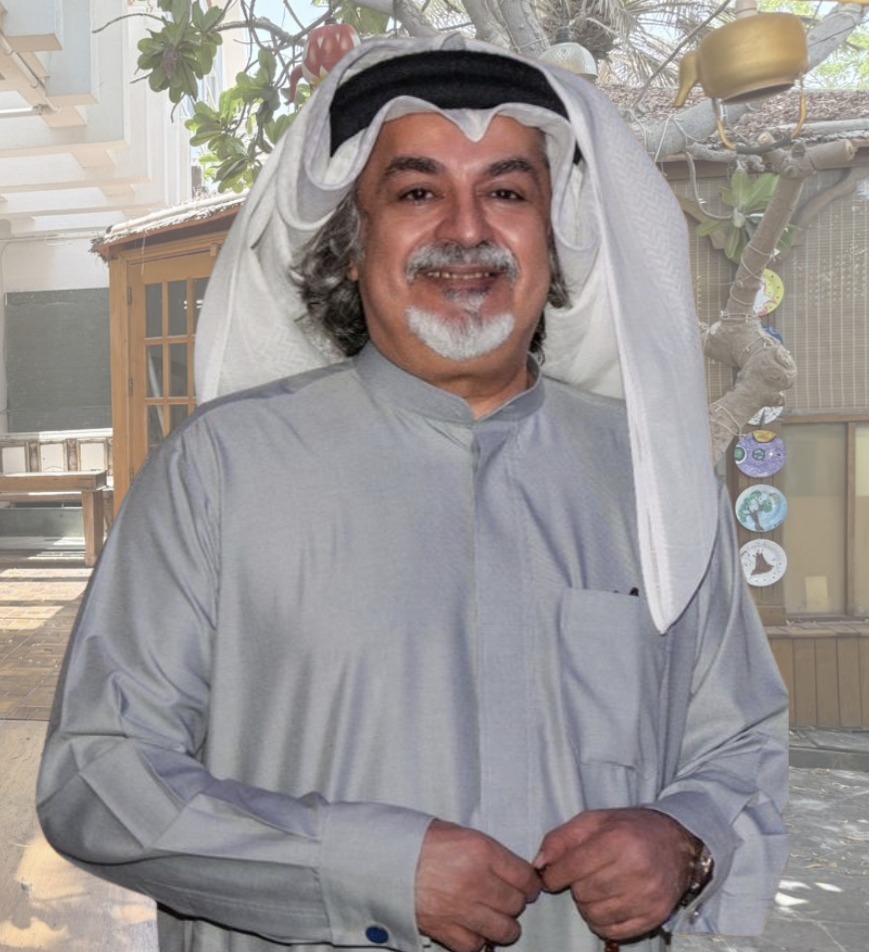
Khalid Al Mutawaa opened Etihad Modern Art Gallery in Abu Dhabi in 2003. In the material he shared with GTN for this feature, he traces the idea back to childhood: his father used to take the family to museums and galleries, and what stuck with him was never just the paintings on the wall. It was the stories, the people and the cultures sitting behind them.
That early curiosity became a career. More than two decades later, Etihad Modern Art Gallery is one of Abu Dhabi’s cultural anchors: a home for Emirati and international artists, a working café, and a room that, by his own description, fills on a good evening with people who came to talk about the work as much as to buy it. He runs it under the Instagram handle @etihadmodernart, and it has stayed independently owned the whole way through.
Building an audience before there was one
Al Mutawaa says the art itself was never the hard part of starting the gallery. The audience was. In 2003, Abu Dhabi’s cultural landscape looked nothing like it does today, and one of his biggest early challenges was simply convincing people that a gallery could be a place for conversation and community, not just a shop selling paintings.
Working with artists taught him a related lesson. Every artist has a different personality and a different vision for their own work, and finding the balance between respecting that and running a functioning gallery business took patience. He describes it now as one of the most valuable parts of the whole journey, because it forced him to build the kind of relationships that a purely commercial gallery never needs.
Why Al Bateen, and why a café too
The gallery sits in a converted villa in Al Bateen, one of Abu Dhabi’s older residential pockets. Around it he built Art House Café, a second gathering point with the same purpose: give a collector, an artist and a stranger who just wandered in a reason to sit at the same table for a while. The National once called it a haven of peace and tranquillity inside the same compound, which is roughly the effect he was going for.
It has also outlasted a lot of the city’s newer cultural projects simply by staying open. A museum acquires and preserves. A commercial gallery like his has to keep finding artists worth showing, sell enough to cover the rent, and stay interesting enough that people come back even though admission is free. Twenty years of doing that without state backing, while Saadiyat Island’s museum district was still years away, is arguably the harder version of the same bet the capital later made at a much bigger scale.
What he wants Etihad Modern Art to do next
His focus now points outward. He wants Emirati art and artists to reach audiences well beyond the region, because he sees art as one of the clearest ways to understand a country: its culture, its heritage, how its society has actually changed over time. The gallery’s exhibitions, collaborations and appearances at art fairs are, in his framing, all steps toward one goal: making Etihad Modern Art Gallery a genuine bridge between the UAE and the international art world, at a moment when Abu Dhabi’s own cultural institutions are chasing something similar at a national scale.
Asked what he wants to leave behind, he doesn’t talk about his own name. He talks about the opportunities he created for artists, and a gallery that keeps going as part of Abu Dhabi’s cultural life long after he has stepped back. His answer for what he’d tell his younger self is more personal: to have explored his own creativity too, and maybe stood on the other side of the gallery wall as the artist, not only the man who gave others the space to show their work.
An Emirati-founded gallery in a city building museums
Al Mutawaa is careful to point out that Etihad Modern Art Gallery was Emirati-founded from day one, which he sees as part of what he’s proudest of when he looks back at 2003. Abu Dhabi’s own cultural infrastructure has since grown into a whole ecosystem of its own, from Qasr Al Watan and Al Hosn to the museum district taking shape on Saadiyat. What he built stayed small on purpose, a single independent room rather than a state-funded institution, and he treats that as a strength rather than a limitation: it lets the gallery move faster, take chances on newer artists, and stay accountable to the people who actually walk through the door rather than to a broader cultural mandate.